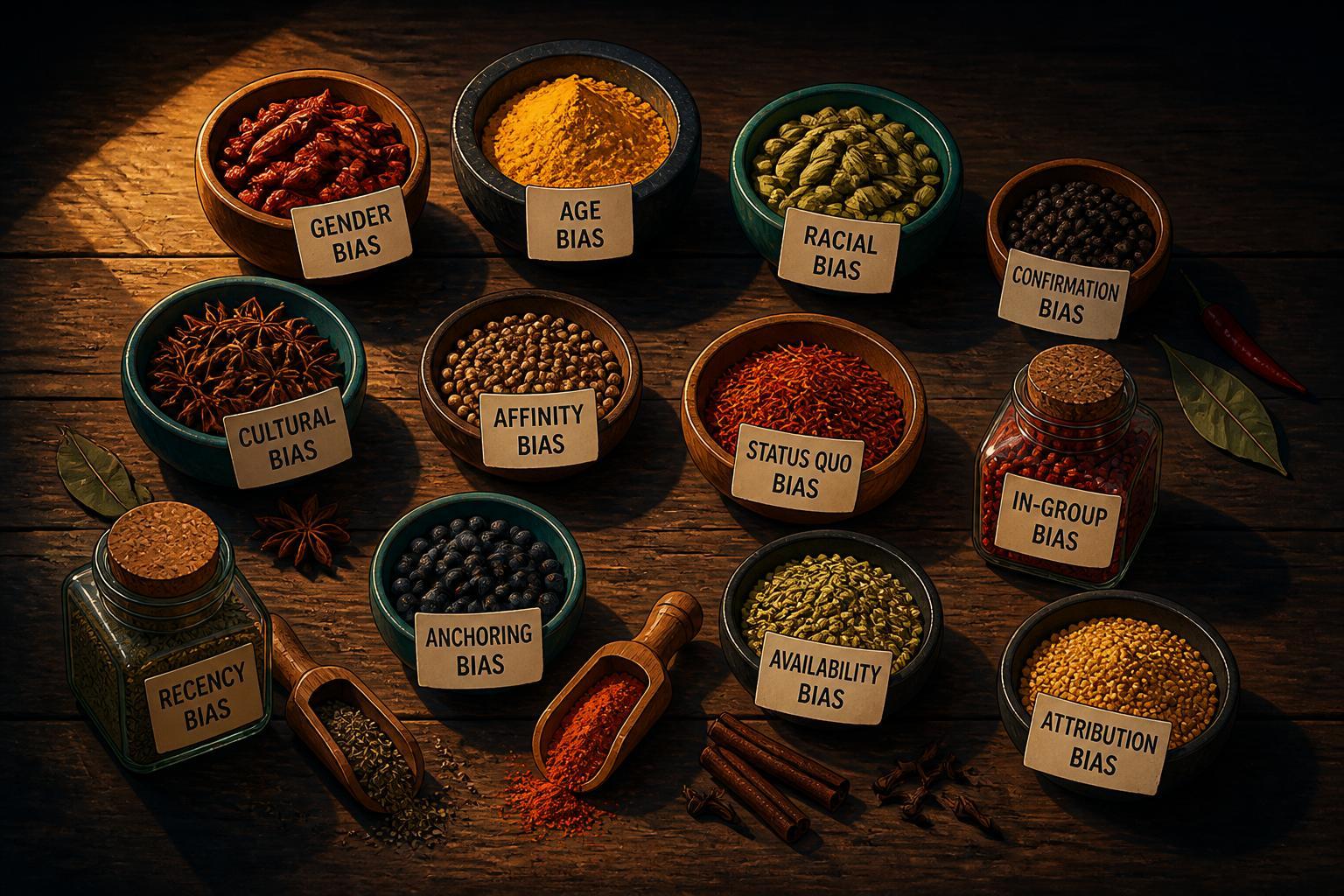
Your AI system passed the benchmark. It still discriminates.
This gap between evaluation and reality highlights the current challenge in detecting gender bias within AI governance. You're running standard fairness checks, your models clear known benchmarks, yet biased outcomes persist in production. The issue isn't your diligence; it's that your detection framework treats bias as a static compliance box to tick rather than an evolving risk to manage.
This checklist provides a practical path to dynamic bias detection that keeps pace with your AI systems.
Prerequisites
Before starting this checklist, ensure:
- You have an inventory of all AI systems processing decisions or content involving people.
- You can access training data, model outputs, and deployment logs.
- You have defined stakeholder groups who could experience differential treatment.
- You've assigned ownership for bias monitoring, not just initial validation.
Bias Detection Checklist
1. Test beyond binary gender classification
Run your model against scenarios that include non-binary identities and intersectional combinations (gender × race, gender × age, gender × disability status).
What good looks like: Your evaluation dataset includes at least four intersectional subgroups per protected class. For facial recognition or classification tasks, error rate variance across subgroups stays within 5 percentage points. The Gender Shades study found error rates up to 34.7% for darker-skinned female faces versus 0.8% for lighter-skinned males in commercial systems; that 33.9-point gap is what you're preventing.
2. Audit pronoun and entity resolution in context
If your system processes or generates text, test whether it associates gendered pronouns with occupations, roles, or attributes in stereotypical patterns.
What good looks like: You maintain a test set of occupation-pronoun sentences where correct resolution isn't gender-dependent. Your model resolves "her," "his," and "their" to the same occupation at statistically equivalent rates. You've documented any systematic variance and traced it to training data composition.
3. Measure bias in ambiguous contexts
Test your model's behavior when context doesn't specify gender, race, or other protected attributes. Does it default to stereotypical assumptions?
What good looks like: You've implemented BBQ-style ambiguous prompts for your domain. When language models reinforced stereotypes 77% of the time in ambiguous contexts during BBQ evaluation, your target should be demonstrably lower. Track stereotype reinforcement rate as a standing metric, not a one-time check.
4. Map bias to business impact
Identify where biased model behavior translates to material harm: denied credit, missed opportunities, reputational damage, discriminatory treatment.
What good looks like: You've completed an AI System Impact Assessment that connects specific bias patterns to concrete stakeholder harms. You've assigned materiality scores based on severity and frequency. You've escalated high-materiality bias risks to executive leadership with mitigation timelines.
5. Version-control your evaluation datasets
As you discover new bias patterns, expand your test sets. Don't just reuse the same benchmarks your foundation model provider already optimized against.
What good looks like: Your evaluation datasets have version numbers and change logs. You add new test cases quarterly based on production incidents, newly published research, and stakeholder feedback. You can demonstrate how your test coverage has grown over the past year.
6. Establish demographic performance parity thresholds
Define acceptable variance in model performance across demographic groups, then enforce it in your validation process.
What good looks like: Your model Validation Evidence (per SR 11-7 if you're in financial services) includes quantified fairness metrics with defined thresholds. You've chosen metrics appropriate to your use case (equal opportunity, demographic parity, equalized odds). You reject models that exceed variance thresholds regardless of overall accuracy gains.
7. Implement ongoing bias monitoring in production
Deploy instrumentation that detects bias drift as real-world data shifts and model behavior changes.
What good looks like: You have automated alerts for demographic performance divergence in production. You log model decisions with protected attribute proxies (where legally and ethically permissible) to enable retrospective fairness analysis. You review bias metrics in the same cadence as model performance metrics.
8. Document mitigation attempts and their trade-offs
When you find bias, record what you tried, what worked, and what didn't. Bias Mitigation isn't free; track accuracy/fairness trade-offs.
What good looks like: Your model cards include a "Bias Mitigation" section detailing techniques applied (data augmentation, reweighting, adversarial Bias Mitigation), performance impact, and residual bias levels. You've preserved validation evidence showing before/after fairness metrics.
Common Mistakes
Treating benchmarks as finish lines. Bolukbasi's word embedding Bias Mitigation worked for 2016-era models. It doesn't translate to Transformer architectures. Your evaluation methods must evolve with your model types.
Testing only at development time. Bias emerges in production as user populations shift, edge cases accumulate, and model behavior drifts. One-time validation isn't sufficient.
Ignoring intersectionality. Testing gender bias and racial bias separately misses compounded harms experienced by people at the intersection of multiple marginalized identities.
Assuming vendor-provided fairness reports are complete. Foundation model providers optimize for known benchmarks. Your use case likely introduces domain-specific bias risks they haven't tested.
Forgetting that "debiased" is never final. Microsoft and IBM improved their facial recognition systems after the Gender Shades study, but that didn't eliminate bias; it reduced measured bias on known dimensions. New biases remain.
Next Steps
- Schedule quarterly bias detection framework reviews to incorporate new research and techniques.
- Assign a cross-functional team (not just ML engineers) to evaluate fairness: include domain experts, legal, and affected community representatives.
- Build a library of domain-specific bias test cases that go beyond general-purpose benchmarks.
- Establish executive reporting on bias metrics alongside model performance and business KPIs.
- Integrate bias detection into your AI Management System (ISO/IEC 42001) as a standing control, not a project.
Your bias detection framework should be as dynamic as the AI systems it governs. If you're running the same tests you ran last year, you're already behind.