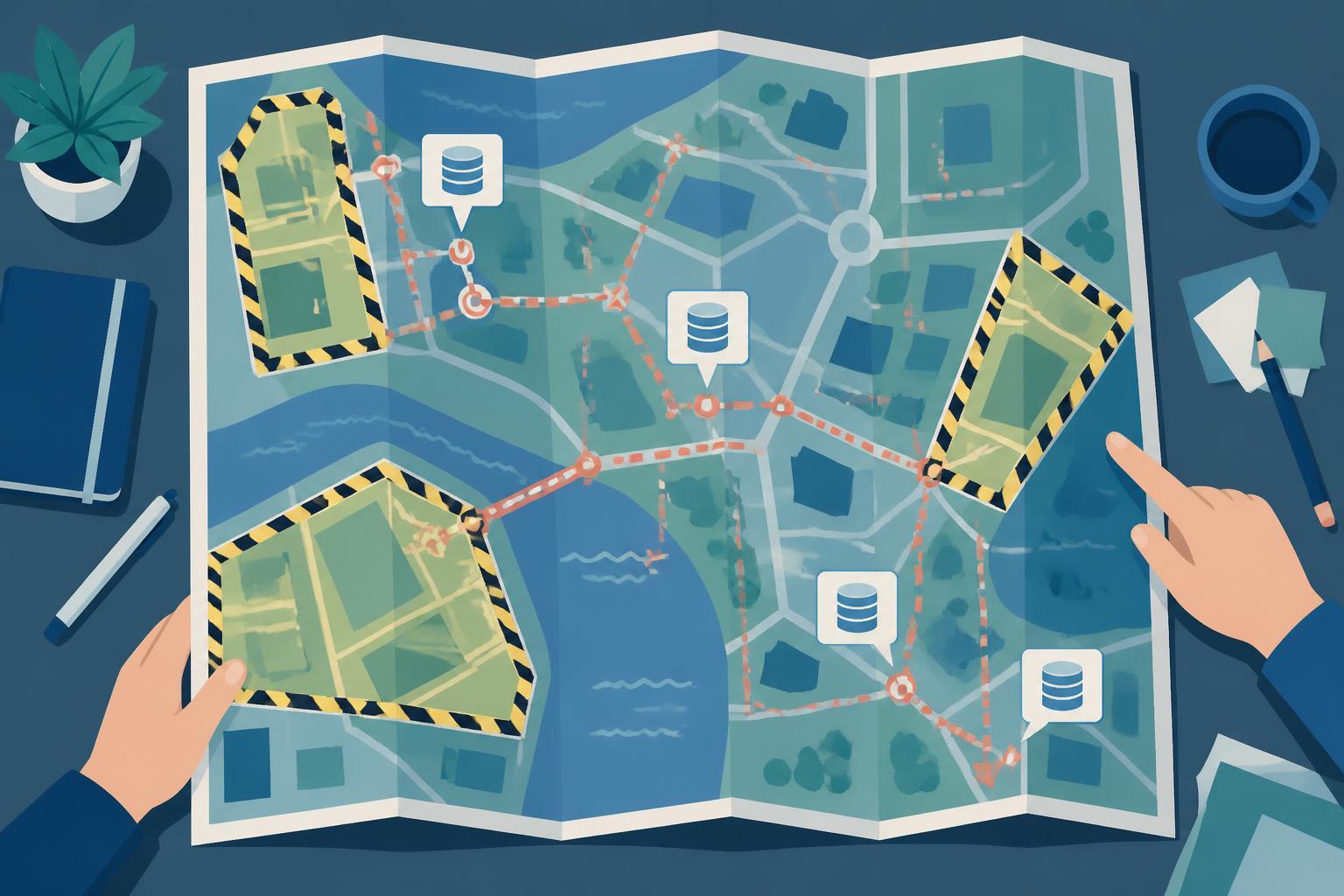
Your AI guardrails likely follow a familiar pattern: define boundaries, implement controls, monitor for violations, and respond when something crosses the line. The problem? Attackers aren't waiting for you to finish that cycle.
Teams often make the same mistakes with AI guardrails because they're building defensive systems based on peacetime assumptions. You're designing controls for users who will respect them, testing against known attack patterns, and assuming you'll have time to patch gaps when they appear. Meanwhile, adversaries are probing your models with undocumented techniques, exploiting the lag between detection and response, and finding creative ways around every rule you write.
The fundamental issue: most guardrail strategies are reactive by design, even when teams believe they're being proactive.
Mistake 1: Treating Guardrails as Binary Gates
Why it happens: Your team implements input filters, output validators, and usage policies as hard boundaries. A prompt either passes or fails. A response either ships or gets blocked. This feels rigorous and measurable.
The real consequence: Sophisticated attacks don't trigger binary flags. Consider prompt injection attempts that gradually escalate context manipulation across multiple turns, or adversarial inputs designed to sit just inside your threshold values. Your guardrails catch obvious violations but miss coordinated probes that map your defensive perimeter. When an incident occurs, you discover the attack vector was technically compliant with every individual rule you wrote.
The specific fix: Implement behavioral scoring that tracks patterns across requests, users, and time windows. Your guardrails should assign risk scores, not just pass/fail verdicts. A single borderline prompt from a new API client warrants different treatment than the same prompt from an established user with a clean history. Build guardrails that ask "what's the cumulative risk profile?" not just "does this violate rule 47?"
Document your scoring logic in your AI Management System controls. ISO/IEC 42001's risk treatment planning (section 6.1.3) requires you to specify how you'll monitor AI system behavior over time, which means your guardrails need temporal awareness built in.
Mistake 2: Validating Against Yesterday's Attacks
Why it happens: Your red teaming exercises and adversarial testing catalogs focus on documented techniques. You test prompt injection patterns from published research, known jailbreak templates, and attack vectors that made headlines. Your validation evidence shows you're defended against everything in MITRE ATLAS.
The real consequence: Attackers don't repeat last year's exploits when they can invent new ones. Your comprehensive defense against documented prompt injection techniques means nothing when someone discovers a novel context manipulation method your tests never imagined. You're fighting the last war while adversaries are already three iterations ahead.
The specific fix: Reserve 30% of your adversarial testing budget for exploratory attacks with no predefined success criteria. Task your red team to break your model using techniques they invent, not techniques they read about. The goal isn't to validate that known defenses work; it's to discover what you're not defending against yet.
When you find gaps, update your guardrails before you publish the findings. Your Technical Documentation (Annex IV) under the EU AI Act requires evidence of robustness testing, but effective robustness testing means discovering and closing vulnerabilities, not just confirming your defenses handle known attacks.
Mistake 3: Designing Guardrails Without Adversarial Threat Models
Why it happens: Your team builds guardrails based on intended use cases and acceptable behavior policies. You define what good looks like and create controls to enforce it. The threat model, if it exists, focuses on accidental misuse or user error.
The real consequence: Guardrails designed for well-meaning users fail against adversarial actors. Your content filters assume users want compliant outputs and will accept refusals. Your rate limits assume normal usage patterns. Your access controls assume credential holders are authorized users. None of these assumptions hold when someone is actively trying to compromise your system. Recent high-profile incidents have shown the critical nature of guardrails, particularly when defensive assumptions don't match adversarial reality.
The specific fix: Build a formal adversarial threat model before you design guardrails. Document: who would want to compromise this system, what would they gain, what resources would they invest, and what attack surfaces exist? Use MITRE ATLAS as a starting framework, but customize it for your specific model and deployment context.
Your threat model should drive guardrail design, not justify it after the fact. If your model processes sensitive data, your guardrails need defenses against extraction attacks. If it influences high-stakes decisions, your guardrails need protections against manipulation. Map each identified threat to specific technical controls, then validate those controls against adversarial scenarios, not just compliance checklists.
Mistake 4: Assuming Detection Equals Prevention
Why it happens: Your monitoring dashboards show real-time guardrail violations. You get alerts when thresholds are exceeded. You have incident response procedures documented. Detection feels like control.
The real consequence: The gap between detecting a violation and preventing damage is where attacks succeed. Your system logs the anomalous behavior, triggers an alert, routes it to the on-call engineer, who investigates and decides on a response. During that window, an adversary can extract model weights, poison training data, or exfiltrate sensitive information. Detection without immediate automated response is just expensive documentation of how you got compromised.
The specific fix: Your guardrails need autonomous enforcement mechanisms that act faster than human response times. When you detect a high-confidence attack pattern, the system should automatically isolate the session, revoke credentials, and block the vector without waiting for human approval. Save human judgment for ambiguous cases.
This requires clear escalation thresholds in your risk treatment plan. Define which violations trigger automatic blocking, which require human review within specific timeframes, and which get logged for pattern analysis. Your AI RMF Playbook's govern function includes continuous monitoring; make sure your monitoring can actually govern in real-time, not just report.
Mistake 5: Building Guardrails That Can't Evolve
Why it happens: Your guardrails are implemented as static rules, hardcoded filters, or fixed threshold values. Changing them requires code updates, testing cycles, and deployment windows. This feels stable and controlled.
The real consequence: Attack techniques evolve weekly. Your static guardrails become obsolete between deployment cycles. By the time you've identified a new attack pattern, updated your rules, tested the changes, and pushed to production, adversaries have already moved on to the next technique. Your guardrail evolution timeline is measured in weeks; adversarial innovation happens in days.
The specific fix: Architect guardrails as configurable policy engines, not hardcoded logic. Your security team should be able to update detection rules, adjust threshold values, and modify enforcement actions without code changes. Separate policy from implementation so you can adapt defenses as fast as threats evolve.
This doesn't mean eliminating review processes. Your changes still need validation and approval. But the validation should take hours, not sprints. Implement guardrail updates through configuration management systems with version control, automated testing, and rollback capabilities. When a new attack pattern emerges, you should be able to deploy defensive updates the same day.
Prevention Checklist
Before you deploy your next AI system with guardrails:
- Your guardrails assign risk scores across multiple requests, not just pass/fail individual inputs
- At least 30% of your adversarial testing budget goes to discovering unknown attack vectors
- You've documented specific adversarial threat models for this system, not generic AI risks
- High-confidence attack detections trigger automatic enforcement within seconds, not minutes
- Your security team can update guardrail policies without code deployments
- You've mapped each identified threat to specific technical controls with validation evidence
- Your monitoring tracks behavioral patterns across time windows, users, and request sequences
- You can deploy guardrail updates in hours when new attack techniques emerge
- Your Technical Documentation includes both known defenses and discovered gaps from exploratory testing
- Your risk treatment plan specifies which violations get automatic blocking vs. human review
The gap between your guardrails and adversarial reality isn't about technology limitations. It's about designing defensive systems that match how attacks actually work, not how you wish they worked.