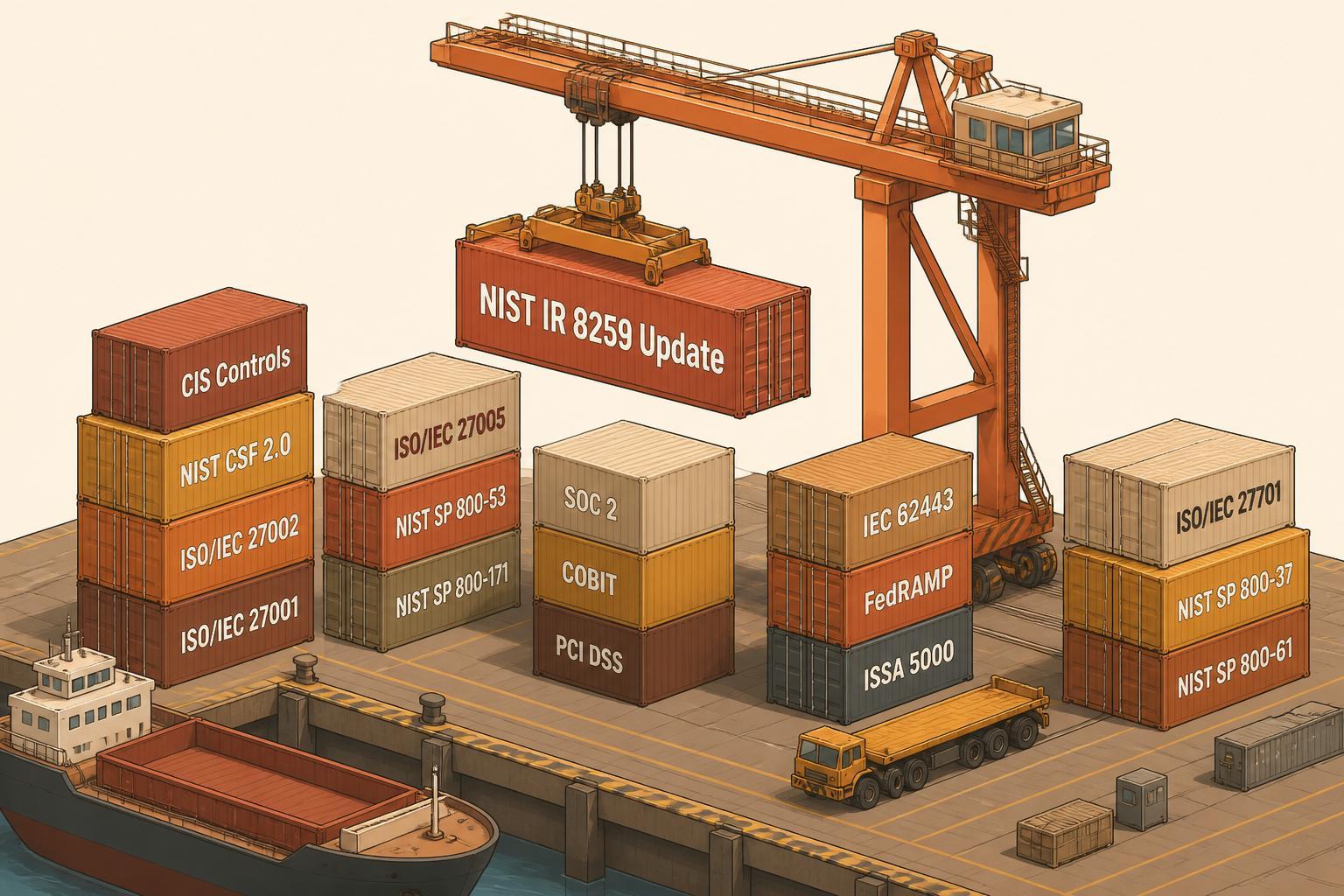
The second public draft of NIST IR 8259 Revision 1 has introduced significant changes that go beyond minor updates. After gathering feedback from over 400 participants across industries, federal agencies, and research institutions, NIST has restructured how manufacturers should approach IoT product cybersecurity. The comment period is open until December 10, 2025.
If your team is building governance frameworks for connected devices, these changes are crucial. Here's what's shifted and what actions you need to take.
Key Changes in the Second Draft
NIST has split existing activities and added a new foundational step. Activity 0 now anchors the entire process, while the former Activity 3 is now divided into Activities 3 and 4. The revision emphasizes risk assessment and threat modeling as continuous inputs rather than one-time exercises. Section 2.6 now clearly maps the relationship between customer needs, implementation methods, and product cybersecurity capabilities.
The document also integrates the NIST Cybersecurity Framework into Activity 0, providing manufacturers with a structured starting point for identifying cybersecurity requirements before product design begins.
Four Critical Findings for Your Program
1. Risk Assessment Moves Earlier and Becomes Mandatory
The new Activity 0 requires an initial risk assessment before defining product requirements. This isn't just paperwork. Your team must identify threat scenarios, assess likelihood and impact, and determine necessary cybersecurity capabilities. If you've been treating risk assessment as a mid-development checkpoint, you'll need to restructure your product development lifecycle.
2. Threat Modeling Is Now an Ongoing Input, Not a Phase
The revision treats threat modeling as a continuous process. You can't run a threat modeling workshop once and consider it done. As you move from requirements definition through design and into post-market monitoring, you're expected to integrate new threat intelligence and update your threat models. This aligns with how adversaries operate but requires changes in tools and processes.
3. Customer Needs Now Map Explicitly to Technical Capabilities
Section 2.6 formalizes the connection between customer needs (security outcomes), how you'll deliver them (implementation methods), and what the product must do (cybersecurity capabilities). This traceability is essential for audit readiness. When regulators or customers ask why specific controls were implemented, you need to trace backward through this chain. If you're documenting product security decisions in spreadsheets or slide decks, maintaining this mapping at scale will be challenging.
4. The Framework Acknowledges Cross-Industry Variation
NIST has balanced specificity with broad applicability. The worked example they're developing will show how a manufacturer progresses through the activities, but they avoid prescribing one-size-fits-all solutions. This is important if you're building IoT products for multiple sectors. You'll need sector-specific threat models and risk assessments, but the activity structure remains consistent.
Implications for Your Team
If you're responsible for IoT product security or vendor risk management, you're facing three immediate challenges:
Your product development process likely doesn't start with formal risk assessment. Most teams begin with feature requirements and add security controls later. The revised IR 8259 inverts this. You'll need to shift security left, meaning your security team needs involvement before product managers write requirements documents.
Your threat modeling cadence is probably insufficient. If you're running annual threat modeling exercises or treating them as one-time deliverables, you're not meeting the standard's intent. You need a process for continuously incorporating threat intelligence into product decisions.
Your documentation probably can't prove the chain from customer needs to implemented controls. When you make security decisions, can you trace them back to specific customer requirements or risk scenarios? If not, you're vulnerable during audits or incident response.
Action Items by Priority
Immediate (Next 30 Days)
Submit comments on the second public draft by December 10, 2025. Focus on areas where your organization faces implementation challenges or where the guidance conflicts with sector-specific requirements. NIST explicitly wants feedback on balancing specificity with broad applicability.
Short-Term (Next Quarter)
Map your current product development process against the revised activity structure. Identify where risk assessment and threat modeling currently happen (if at all) and where they need to move. Create a gap analysis that quantifies the process changes required.
Assess your threat intelligence integration. How do you currently incorporate new threat information into product security decisions? If you don't have a formal process, start building one. This doesn't require expensive tools; it requires defined responsibilities and decision points.
Medium-Term (Next Six Months)
Restructure product security documentation to trace customer needs through implementation methods to product capabilities. You need bidirectional traceability: from requirements down to controls, and from controls back up to customer needs.
Build continuous risk assessment into your product lifecycle. This means defining triggers for reassessment (new threat intelligence, design changes, incident patterns) and assigning clear ownership.
Attend the December 16-17, 2025 workshop if you're actively implementing these practices. NIST will discuss the worked example and field implementation questions.
The comment period closes December 10, 2025. If you're building IoT products or evaluating IoT vendors, read the full draft and submit specific feedback where the guidance doesn't match operational reality. NIST has shown they'll incorporate substantive comments; over 400 participants influenced this draft's structure.